
 All motorists traveling on Texas roadways have a duty to keep their vehicles in a safe operating condition. At Mokaram Injury Lawyers, we regularly see how inadequate maintenance leads to devastating crashes. We firmly believe drivers should have accurate, easy-to-understand information about what Texas law demands. Vehicle inspections exist to protect you, your passengers, and everyone else sharing the highway.
Don’t let a careless driver’s failure to maintain their vehicle go unanswered. Contact Mokaram Injury Lawyers at 281-222-2222 today to speak with our car accident attorneys in a free case review. We’re ready to fight for you.
What Are the Vehicle Inspection Laws for Non-Commercial Vehicles in Texas?
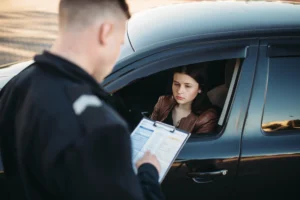 Texas eliminated the mandatory annual safety inspection and the need for a physical windshield sticker in 2025 under House Bill 3297, replacing them with a $7.50 inspection program replacement fee that is rolled into your annual registration renewal cost.
Newly purchased vehicles that have never been registered are assessed a $16.75 fee. This payment covers the vehicle’s first two years of registration and serves as a substitute for the standard safety inspection during that timeframe.
What Are the Vehicle Inspection Laws for Commercial Vehicles in Texas?
Commercial vehicles in Texas include those with a gross vehicle weight rating (GVWR) of 10,001 pounds or more, those designed to transport 16 or more passengers, and those used to transport hazardous materials. These vehicles face stricter inspection standards because of the greater risk they pose on the road:
- Annual Inspection: Commercial vehicles must undergo a thorough annual inspection by a qualified inspector, who checks every major system.
- Scope: The inspection covers brakes, steering, suspension, frame integrity, exhaust systems, coupling devices, and lighting far more extensively than a standard passenger vehicle check.
- Safety Equipment: Fire extinguishers, reflective triangles, and other federally mandated safety equipment must be present, functional, and properly mounted during the inspection.
- Documentation: Operators must keep inspection records and certificates accessible in the vehicle, as law enforcement can request them during any traffic stop or roadside check.
- Out-of-State Vehicles: Commercial vehicles registered in other states but operating in Texas must still meet Texas inspection standards or carry proof of equivalent compliance from their home state.
The Federal Motor Carrier Safety Administration (FMCSA) under 49 CFR Part 396 also governs commercial vehicle maintenance and inspection standards. Drivers and fleet operators should stay up to date on both state and federal requirements to avoid fines and liability issues.
What Fails a Car Inspection in Texas?
Several common problems cause vehicles to fail their safety inspection every year. If any of the following issues show up during your visit to the inspection station, your vehicle will not pass:
- Worn brake pads or rotors: Brakes that fall below minimum thickness standards will automatically fail the inspection.
- Burned-out headlights or taillights: Every required light must function properly, including turn signals and brake lights.
- Cracked or missing mirrors: Your vehicle needs both side mirrors and a rearview mirror in working condition.
- Bald or damaged tires: Tread depth must meet minimum requirements, and tires with visible cords, bulges, or cuts will fail.
- Faulty steering components: Excessive play in the steering wheel or damaged tie rods will prevent your vehicle from passing.
- Non-functional horn: Your horn must produce an audible sound that other drivers can hear.
- Exhaust leaks: Any exhaust leak, especially one that could allow fumes into the cabin, will result in a failure.
If you have been involved in a car accident caused by another driver’s negligence, the failed inspection history of that vehicle can become an important piece of evidence.
Which Vehicles Require an Emissions Test in Texas?
Not every vehicle in Texas needs an emissions test. Electric vehicles and motorcycles are exempt from emissions testing. Certain diesel-powered vehicles may be exempt depending on weight, model year, and county requirements. Vehicles that still require emissions testing include:
- Gas-powered vehicles
- Vehicles that are 2 to 24 years old
- Vehicles registered or used primarily in one of the designated counties
What Counties Require Emissions Testing in Texas?
Texas mandates emissions testing only in counties identified by the Texas Commission on Environmental Quality as having air quality concerns. The Texas Department of Public Safety maintains the full list of affected counties, which currently includes:
- Brazoria
- Collin
- Dallas
- Denton
- Ellis
- El Paso
- Fort Bend
- Galveston
- Harris
- Johnson
- Kaufman
- Montgomery
- Parker
- Rockwall
- Tarrant
- Travis
- Williamson
If you are not sure whether your county requires emissions testing, check your registration renewal notice or contact your local county tax office. The requirements can change as the state updates its air quality assessments.
Why Do Vehicles Fail the Emissions Test?
Emissions failures often catch drivers off guard, especially when their vehicle seems to run fine. A vehicle can fail the On-Board Diagnostics (OBD) test even without showing obvious symptoms if the internal computer detects a problem with the emissions control system:
- Faulty catalytic converter: A worn or damaged catalytic converter cannot properly reduce harmful exhaust gases.
- Bad oxygen sensors: Malfunctioning sensors send incorrect data to the engine computer, which throws emissions codes.
- Loose or missing gas cap: A poor seal in the fuel system allows vapors to escape, triggering an evaporative emission system fault.
- Engine misfires: Misfiring cylinders release unburned fuel into the exhaust, raising emissions above acceptable levels.
- Outdated software calibration: Some vehicles need updated engine control module software to meet current emissions standards.
If your vehicle fails the emissions test, most repair shops can diagnose the specific issue using the OBD trouble codes. Many problems have affordable fixes, so do not assume the worst before getting a proper diagnosis.
What Are the Penalties for Not Following Inspection Laws?
Driving without a valid inspection in Texas is generally classified as a Class C misdemeanor. If you receive a citation, fines can reach $500, and the violation will appear on your driving record. Texas Justice of the Peace Courts handle thousands of these cases each year, and judges generally expect you to show proof of a completed inspection before they will dismiss or reduce the charge.
Beyond the fine itself, an inspection-related violation can complicate things if you are involved in a car accident. The other driver’s insurance company may try to argue that your vehicle’s condition contributed to the crash, which could reduce the compensation you receive. Staying current on your inspection removes that argument entirely and keeps you in the strongest possible position.
When to Call Mokaram Injury Lawyers
Poorly maintained vehicles can malfunction, leading to serious accidents. The lack of safety inspection requirements for consumers does not excuse maintenance obligations. When a driver’s negligent maintenance causes a crash and you suffer injuries, it’s time to seek your free case review with our car accident attorneys.
FAQ: Answers for Texas Motorists
How Long Does a Safety Inspection Take?
A standard safety inspection typically takes between 15 and 30 minutes at a certified station. The actual time depends on how busy the shop is and whether the inspector finds any issues that require closer inspection.
Will I Fail My Inspection If My Windshield Is Cracked?
It depends on the crack’s size and location. A crack that obstructs the driver’s line of sight or compromises the structural integrity of the windshield will cause a failure, but small chips away from the driver’s direct view may not.
Are Seatbelts Always a Required Item of Inspection?
Yes, inspectors must verify that all factory-installed seat belts are present, properly anchored, and fully functional. A missing or damaged seat belt in any factory-equipped seating position will result in an inspection failure.
How Many License Plates Am I Required to Display?
Texas requires two license plates on most vehicles, one mounted on the front and one on the rear. Certain vehicle types, like motorcycles and trailers, only require a single rear plate, so check the specific rules for your vehicle class.
Contact a Texas Car Accident Lawyer
If a vehicle inspection violation contributed to your accident, you may have a strong legal claim. Contact Mokaram Injury Lawyers at 281-222-2222 or contact us online today for your free case review with a Texas car accident lawyer who will fight to get you the compensation you deserve.

They are always committed to supporting the people and standing up for the cause. The staff treats everyone with compassion, especially Milagro, who goes above and beyond to ensure humane and respectful care.
From the moment I called, I felt at ease and that’s largely thanks to Lesly. She was incredibly kind, patient, and professional. It’s often overlooked, but that first interaction really sets the tone, especially when you’re calling about something as stressful and personal as a potential injury case.
had a great experience working with Lesly, who handled my case with professionalism, care, and attention to detail. From the beginning, they made me feel heard and supported, clearly explaining the process and always keeping me informed every step of the way. Their communication was timely and thoughtful, and they truly went above and beyond to make a stressful situation feel more manageable.
I spoke with Lesly over the phone and had such a great experience. She was incredibly helpful, patient, and informative. She took the time to explain everything clearly regarding my case and made sure I understood all my options. It made the process way less stressful. Thank you, Lesly, for your professionalism and kindness!
“I live near the Galleria and recently needed help with a premises case I experienced. Lesly Rodriguez took my information, and the entire process was handled smoothly. I appreciate the professionalism and efficiency!”
Working with Ali J was an excellent experience. He handled everything with professionalism and made the process clear and straightforward. I always felt informed and confident knowing he was representing me. I truly appreciate his expertise and highly recommend him.
Mokaram Injury Lawyers made a difficult situation so much easier to handle. Their team really fought for me and made sure I understood every step along the way. I felt like more than just a case number—they genuinely cared about my outcome. Highly recommend them to anyone in need of a reliable and dedicated injury lawyer in Houston!
If you’ve been injured and need someone to advocate for your rights, Mokaram Injury Lawyers is an exceptional choice. With years of experience specializing in personal injury cases, Mokaram Injury Lawyers offers expert legal counsel with a focus on maximizing compensation for medical bills, lost wages, and pain and suffering. Known for a compassionate approach and a strong record of successful outcomes, Mokaram Injury Lawyers fights hard to ensure justice for clients!


Awards & Honors









Contact Us Today to Schedule
Your Free Consultation
Fields Marked With An “*” Are Required