A pedestrian accident happens when a driver and a person on foot fail to see, judge, or yield to each other in time. In Texas, a short list of specific causes explains nearly every one of these crashes. Many of the same factors, distraction, speed, and impairment, also drive the broader pattern of car accident claims Houston sees every year.
What Causes Most Pedestrian Accidents in Texas?
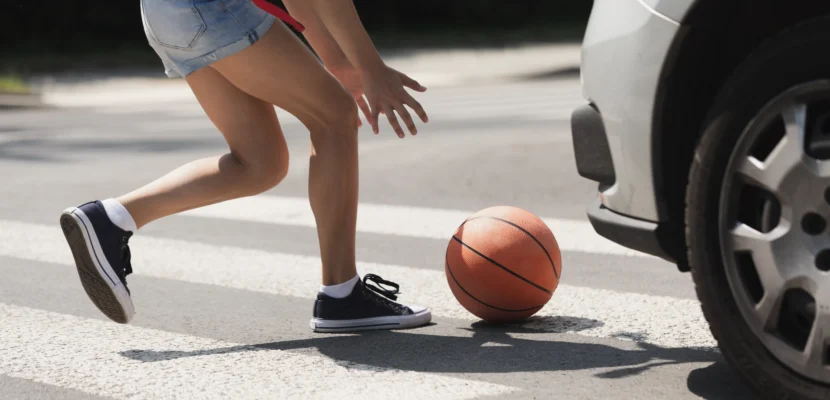
Most pedestrian accidents happen because a driver failed to see, slow for, or yield to someone on foot. Distraction, speed, impairment, and poor visibility are the most common reasons why.
Road design and pedestrian choices play a role too, and a few of the causes carry real weight under Texas law.
The 10 Most Common Causes of Pedestrian Accidents
These 10 causes account for the overwhelming majority of pedestrian-vehicle collisions in Texas. Most come down to one driver or one pedestrian missing the other for a split second too long.
- Distracted driving: A driver checking a phone or reaching for food misses a person stepping off a curb.
- Failure to yield the right-of-way at a crosswalk: Under Section 552.003 of the Texas Transportation Code, a driver must stop and yield to a pedestrian in a crosswalk when no signal is working, whenever the pedestrian is on, or approaching, the driver’s half of the road. That duty has a limit. A pedestrian cannot suddenly step off a curb into a vehicle’s path so close that the driver has no real chance to stop, so timing matters on both sides of the crosswalk.
- Speeding: Speeding cuts reaction time and lengthens stopping distance, mainly near schools and crosswalks.
- Driving under the influence: Alcohol or drugs slow reaction time and cloud judgment, making a driver less likely to brake or steer around a pedestrian.
- Poor visibility: Dusk, nighttime, heavy rain, and blind spots make it harder to spot a pedestrian in time.
- Running stop signs and red lights: Running a light or stop sign removes the pause a driver needs to check crosswalks, leaving a pedestrian no warning.
- Turning vehicles that do not check for pedestrians: Drivers turning left or right often watch for gaps in traffic and forget to check the crosswalk, missing a pedestrian who is crossing.
- Backing up: Backing out of a driveway or parking space limits a driver’s rear view, and a child can be in that blind zone for a moment.
- Crossing mid-block or outside a crosswalk: This puts a pedestrian where drivers are not watching for foot traffic. Even so, it does not clear a speeding or distracted driver, since Texas splits fault by percentage rather than putting it all on one side.
- Road design gaps: Missing sidewalks, unmarked crossings, poor lighting, and road work put pedestrians and drivers in spots neither one planned for.
Who Is Most at Risk of Being Struck as a Pedestrian?
The pedestrians most at risk are children who dart into the street without judging a vehicle’s speed, older adults who cross more slowly than a signal allows, and anyone walking at dusk or after dark on a road without sidewalks or marked crossings.
Children have not yet learned to judge how fast a car is moving, and many crosswalk signals leave older adults little time if the signal changes mid-crossing. Anyone walking after dark on a street without sidewalks or marked crossings is harder for a driver to see in time, and injuries from these higher-risk crashes tend to be more severe, since the driver has less time to slow down.
Who Is at Fault When a Driver Hits a Pedestrian in Texas?
In Texas, fault is decided by percentage. The driver, the pedestrian, or both can share responsibility, and a pedestrian found more than 50% at fault cannot recover any compensation.
The starting point is the crosswalk rule discussed above, which requires a driver to yield to a pedestrian in the crosswalk when no signal is working. Section 33.001 of the Texas Civil Practice and Remedies Code sets that 50% bar, and Section 33.012 then reduces a pedestrian’s recovery by their own percentage of fault when they are at or under that line. This same fault-sharing principle applies broadly across Texas injury claims, not just pedestrian cases.
Frequently Asked Questions
Texas pedestrians ask these questions most often after a close call or a crash.
What Should I Do After Being Hit by a Car as a Pedestrian?
Get medical care first, even if you feel fine. Injuries like concussions and internal bleeding often show no symptoms right away. Call 911 for a police report, and get the report number before leaving.
Photograph the scene and your injuries if you can, and get the driver’s insurance details. Skip any recorded statement to their insurer until a doctor checks you out. These same steps apply broadly after any Texas car accident.
Does Jaywalking Automatically Make Me at Fault for My Injuries?
No. Crossing outside a marked crosswalk affects how fault is divided, but it does not automatically bar a pedestrian from recovering compensation.
Texas’s fault-sharing rule applies the same way here. A speeding or distracted driver can still bear the larger share of fault even after a mid-block crossing.
Do I Need a Lawyer for a Pedestrian Accident Claim?
Not every pedestrian accident requires a lawyer, but any claim involving a serious injury or a disputed fault percentage benefits from one. Insurers weigh a claimant’s own conduct heavily under Texas’s fault-sharing rule, and our attorneys review those percentages closely before you accept an offer.
An adjuster’s first offer often reflects the driver’s version of events, and the gap between that offer and the real cost of an injury tends to grow as medical bills climb.
How Mokaram Injury Lawyers Can Help After a Pedestrian Accident
Mokaram Injury Lawyers has represented Texans hurt by negligent drivers for more than 30 years, including a $3.25 million verdict in a car accident case. We take calls day and night, including weekends, when people need us most.
We also charge no fee unless we win your case. Case expenses such as filing fees, expert costs, and medical record fees are generally advanced by our firm and repaid from your settlement or award.
Contact Our Personal Injury Lawyers in Houston for a Free Consultation
If you or a loved one was injured in an accident in Houston, Texas, our team is ready to fight for the compensation you deserve. Contact our experienced personal injury attorneys at Mokaram Injury Lawyers and request your free, no-obligation consultation today.
We proudly serve Harris County and its surrounding areas:
Mokaram Injury Lawyers
Address: 2500 W Loop S #450, Houston, TX 77027
Phone: 281-222-2222
Hours: Open 24/7
Our firm is located near you. Find us with our GeoCoordinates: 29.74123620, -95.45899350