Your child may qualify for a social media addiction lawsuit in Texas when three things line up: the platform’s design was defective, that design caused your child’s diagnosed injury, and the claim is still within the Texas filing deadline. Hours of screen time alone do not decide it. The question is whether the way the app was built can be tied to a documented medical or mental health injury.
If your child’s mood, sleep, or schoolwork changed after months of heavy use, it is natural to wonder whether the company behind the app bears any responsibility.
What Is a Social Media Addiction Lawsuit?
Families bring these cases as product liability claims, which treat the app as a product with a dangerous design. The claim runs against the company that designed and released the app, not against the people who posted content on it.
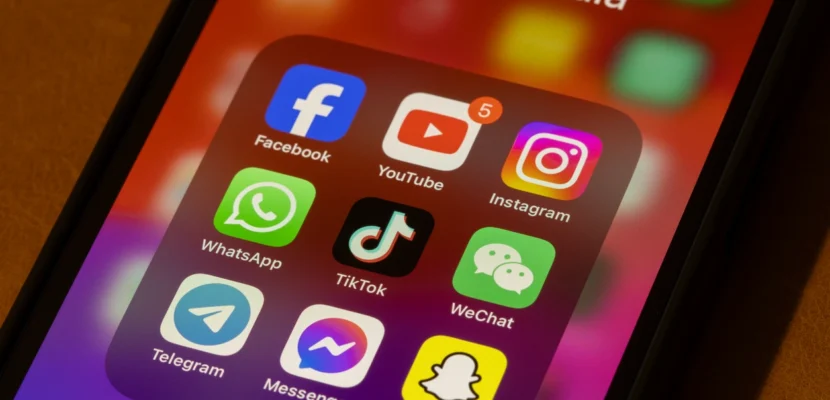
Many of these cases are grouped in a federal multidistrict litigation in California. There, plaintiffs allege that platforms run by Meta, Instagram, Snap, TikTok, YouTube, and Google are defective because they are designed to maximize screen time, which can encourage addictive behavior in adolescents.
What Does Texas Law Require a Family to Prove?
Texas places the burden on the family. Under Section 82.005 of the Texas Civil Practice and Remedies Code, a design defect claim must be proved by a preponderance of the evidence, which means more likely than not. The family must show:
- Safer alternative design: A different design would, in reasonable probability, have prevented or significantly reduced the risk of injury without substantially impairing the product’s usefulness.
- Feasibility: That safer design was economically and technologically feasible when the product left the company’s control.
- Producing cause: The design defect was what Texas courts call a substantial factor in bringing about the injury, without which it would not have happened.
The proof has to connect the app’s features to your child’s own diagnosis rather than to social media use in general. For a parent, that means the medical and counseling records matter as much as the screen-time numbers.
Why These Claims Focus on Design, Not Posts
One federal law shapes how these claims are written. Section 230 of the Communications Decency Act says a provider of an interactive computer service, such as a social media platform, cannot be treated as the publisher or speaker of information another person provided. For that reason, a family’s claim points to features the company built into the app rather than to harmful content someone else posted. Whether that federal protection blocks a particular design claim is decided case by case, on the facts the family pleads.
Does Texas Have a Law Protecting Kids on Social Media?
Yes. The Securing Children Online through Parental Empowerment (SCOPE) Act, passed in 2023, sets duties for digital service providers that know a user is a minor. It gives parents only a narrow way to go to court, without money damages.
Under Section 509.152 of the Texas Business and Commerce Code, the parent of a minor affected by a violation can ask a court for a declaratory judgment, which is a ruling on whether the law was broken, or an injunction, which is an order to stop the practice. Otherwise, the consumer protection division of the Texas attorney general’s office enforces the Act, so a family seeking compensation for a child’s injury relies on product liability law instead.
How Long Does My Family Have to File in Texas?
Texas runs two separate clocks when a child is hurt. Under Section 16.001, a person younger than 18 is under a legal disability, and time under that disability is not counted, so the clock on your child’s own claim generally does not start until the 18th birthday.
Your own claim as a parent, such as one for the medical bills you paid, runs on a different clock. Under Section 16.003, that suit is generally due within two years of the day your claim accrues, meaning the day the legal claim arises, unless a statutory exception applies.
If a child died, the two-year period runs from the date of death, and Section 71.004 gives the wrongful death action to the surviving spouse, children, and parents. Even while a child’s clock is paused, the evidence can be lost long before any deadline runs.
What Evidence Helps Prove a Social Media Addiction Claim?
A product liability claim depends on evidence, and in a social media case these sources carry the most weight:
- The account: In-app usage history, including watch time and activity summaries.
- The device: Screen-time reports that cover more than one app.
- Medical, counseling, and school records: These date the diagnosis and treatment that the producing cause element turns on.
- A written timeline: Notes on when the changes first appeared, which help fix the date the claim accrued.
Frequently Asked Questions About Social Media Addiction Claims
Does My Child Have to Stop Using Social Media to Have a Claim?
No. A child does not have to quit the platform for a claim to go forward. What matters more is keeping the evidence intact, because deleting the account or wiping the device can destroy the usage history that helps prove the claim.
Will My Child Have to Testify?
Much of a child’s part in a case happens through records and written questions during discovery, the stage where each side gathers evidence. A child may also be asked to give a deposition, which is sworn questioning outside the courtroom, and whether that happens varies by case.
Talk to Us About a Social Media Addiction Lawsuit in Texas
Watching a child struggle is hard, and figuring out whether the law offers a remedy should not add to it. Mokaram Injury Lawyers represents injured people across Texas, and our past results include representing several hundred clients in the Astroworld tragedy litigation, which recovered $43.5 million for that group. Past results do not guarantee future outcomes. Our founder, Ali Mokaram, has been licensed in Texas since 1995, and a live person answers our phone 24 hours a day.
If your family is considering a social media addiction lawsuit, you pay no upfront costs and owe no legal fees unless your case results in a financial recovery. Case expenses such as court filing fees, expert witness costs, and medical record retrieval are generally advanced by our firm and repaid from any settlement or award.
Contact Our Personal Injury Lawyers in Houston for a Free Consultation
If you or a loved one was injured in an accident in Houston, Texas, our team is ready to fight for the compensation you deserve. Contact our experienced personal injury attorneys at Mokaram Injury Lawyers and request your free, no-obligation consultation today.
We proudly serve Harris County and its surrounding areas:
Mokaram Injury Lawyers
Address: 2500 W Loop S #450, Houston, TX 77027
Phone: 281-222-2222
Hours: Open 24/7
Our firm is located near you. Find us with our GeoCoordinates: 29.74123620, -95.45899350