
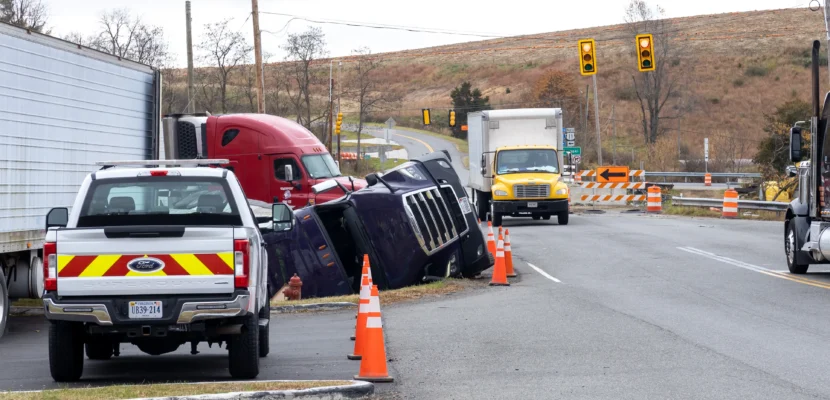
Gross Vehicle Weight Rating, or GVWR weight, is the maximum amount a vehicle can safely weigh when fully loaded, including the truck’s frame, engine, fuel, driver, passengers, and all cargo. Federal law sets GVWR limits for commercial trucks between 26,001 and 80,000 pounds, depending on the vehicle type, and exceeding those limits is not just a regulatory violation. It is one of the leading contributors to catastrophic truck accidents on Texas highways.
If you suffered an injury in a crash involving a commercial truck, GVWR and weight compliance records are some of the most important pieces of evidence in your case.
Why GVWR Matters on the Road
When a commercial truck is loaded beyond its GVWR, the physics of the vehicle change in ways that make a crash far more likely and far more deadly. Heavier trucks take significantly longer to stop, respond more slowly to steering inputs, and place extreme stress on tires and brakes that are only rated for a specific load range.
The consequences are almost always felt most severely by the people in the passenger vehicles sharing the road with them. An 80,000-pound truck operating within its legal limits is already a serious collision risk. One operating over that threshold becomes something closer to an unguided projectile when something goes wrong.
Federal law enforces weight regulations for commercial vehicles under 23 CFR Part 658, which sets the federal bridge formula and maximum weight standards for trucks operating on interstate highways.
GAWR vs. GVWR: What Is the Difference?
These two terms are related but refer to different things, and both matter in a truck accident investigation.
GVWR refers to the maximum total weight of the vehicle when fully loaded. GAWR, or Gross Axle Weight Rating, refers to the maximum load that a single axle on the vehicle can safely carry. A truck can technically be within its overall GVWR but still violate GAWR limits if the cargo is unevenly distributed and concentrated too heavily over one axle.
Improper load distribution is a common and dangerous violation. It can cause axle failure, tire blowouts, and sudden loss of vehicle control, even when the total gross vehicle weight for trucks appears to be within acceptable limits on paper.
GCWR Meaning and Why It Applies to Tractor-Trailers
For combination vehicles like tractor-trailers and 18-wheelers, a third rating comes into play. GCWR, meaning Gross Combination Weight Rating, sometimes called Gross Combination Mass, is the maximum safe operating weight of the tractor and trailer together as a combined unit.
This is the figure that governs most of the large commercial trucks you see on Texas roads. The federal maximum gross combination mass for most commercial vehicles operating on interstate highways is 80,000 pounds under 23 CFR § 658.17. Texas also imposes its own limits through the Texas Department of Transportation, including:
- Single axle: 20,000 pounds maximum.
- Tandem axle: 34,000 pounds maximum.
- Gross combination weight: 80,000 pounds maximum.
There are additional seasonal weight restrictions and bridge limitations on specific corridors.
Violations of either the federal or state limits can support a negligence claim when an overloaded truck causes an accident.
How Trucks Are Classified by Weight
The Federal Highway Administration assigns commercial vehicles to weight classes that determine which safety rules and equipment requirements apply to them. Rather than a simple dividing line, the classification system creates a spectrum of risk, and the higher the class, the more severe the consequences when something goes wrong.
The classes most commonly involved in serious accident cases are:
- Class 5 covers medium-duty trucks weighing 16,001 to 19,500 pounds, typically used for local deliveries and utility work
- Class 6 applies to single-axle trucks in the 19,501 to 26,000-pound range, often seen in regional freight routes
- Class 7 covers city cargo and larger delivery trucks between 26,001 and 33,000 pounds
- Class 8 is the category that produces the most catastrophic accidents, covering semi-trucks, 18-wheelers, and heavy haulers at 33,001 pounds and above
At the Class 8 level, even a properly loaded truck presents serious collision risk. An overloaded one operating above its rated threshold is a danger that should never have been on the road.
What Happens When Weight Limits Are Ignored
Trucking companies operate on tight margins and tighter deadlines. Overloading a truck, even modestly, can translate into fewer trips and lower costs. That financial pressure is exactly why weight violations happen as often as they do, and why the consequences land on the people in smaller vehicles who had no role in that decision.
Overloaded trucks behave differently in ways most drivers never see coming:
- Braking distance can increase by hundreds of feet, leaving a driver with no time to stop before impact
- Tires rated for a specific load range fail without warning when that range is exceeded, often at highway speeds
- Brake systems on heavily loaded trucks generate heat that causes fade and failure, particularly on long downgrades or in stop-and-go traffic
- An overloaded trailer raises a truck’s center of gravity, making rollover a serious risk during routine lane changes
- Cargo that shifts mid-trip changes the truck’s weight distribution in real time, creating handling conditions the driver cannot predict or control
Each of these failure points has one thing in common: they are the direct result of a decision someone made before the truck ever left the loading dock.
Who Can Be Held Responsible After an Overweight Truck Accident?
Weight violations rarely happen by accident. They are often the result of deliberate decisions made by multiple parties across the shipping chain. In an overloaded truck accident case, liability can extend beyond the driver to include:
- The trucking company that dispatched an overloaded vehicle
- The loading facility or cargo owner that exceeded safe weight limits
- A third-party logistics provider that coordinated the shipment
- Maintenance providers who failed to flag brake or tire issues related to load stress
- Equipment manufacturers, if a component failed below its rated threshold
Identifying every responsible party requires access to weight verification records, loading documentation, electronic logging data, and maintenance histories.
Trucking companies and their insurers move quickly after an accident to protect that information. Getting legal representation early is the most effective way to make sure it is preserved.
Frequently Asked Questions About Commercial Truck Weight Limits
How Do I Know If the Truck That Hit Me Was Overloaded?
Weight records, weigh station data, electronic logging device files, and cargo manifests can all reveal whether a truck was operating over its legal limits. These records are often the strongest evidence available in an overloaded truck accident case and must be requested quickly before they are altered or destroyed.
Is GVWR the Same as the Actual Weight of the Truck?
No. GVWR is the maximum rated capacity, not necessarily what the truck weighed at the time of the crash. The actual weight at the time of the accident, compared with the rated limit, determines whether a violation occurred.
Does Overloading a Truck Automatically Mean the Trucking Company Is Liable?
It is strong evidence of negligence, but liability also depends on how the overloading contributed to the crash. Our truck accident attorneys will review the full set of facts to build a claim that connects the weight violation to the specific harm you suffered.
How Long Do I Have to File a Lawsuit After an Overweight Truck Accident in Texas?
Under the Texas Civil Practice and Remedies Code § 16.003, you have two years from the date of the accident to file a personal injury lawsuit. However, truck accident cases involve time-sensitive evidence, including electronic logging data, weight records, and cargo documentation, that can be altered or destroyed if not requested promptly. Contacting an attorney as soon as possible after a crash gives your team the best chance of preserving what is needed to build your case.
Can a Truck Be Within Its Overall GVWR but Still Be Violating the Law?
Yes. A truck can comply with its overall GVWR and still violate GAWR limits if cargo is unevenly distributed. Federal and Texas law impose separate limits on individual axle loads, and concentrated weight over a single axle can cause tire failure, axle damage, and loss of vehicle control even when the truck’s total weight appears legal on paper. Our team reviews both overall weight records and axle distribution data when investigating overloaded truck cases.
Contact Our Personal Injury Lawyers in Houston for a Free Consultation
If you or a loved one was injured in an accident in Houston, Texas, our team is ready to fight for the compensation you deserve. Contact our experienced personal injury attorneys at Mokaram Injury Lawyers and request your free, no-obligation consultation today.
We proudly serve Harris County and its surrounding areas:
Mokaram Injury Lawyers
Address: 2500 W Loop S #450, Houston, TX 77027
Phone: 281-222-2222
Hours: Open 24/7
Our firm is located near you. Find us with our GeoCoordinates: 29.74123620, -95.45899350