
 Lane splitting in Houston puts riders in a legal gray area that insurance companies exploit every single time. Texas has no statute that explicitly permits or prohibits lane splitting, which means when a crash happens, the first thing an insurer will do is argue the rider was at fault. If you suffered an injury while riding between lanes of traffic, that argument does not have to stick, and it often does not when the other driver’s negligence is properly documented.
If you suffered an injury in a motorcycle accident due to lane splitting, Mokaram Injury Lawyers is available 24/7 to review your case at no cost. Call (281) 222-2222 or contact us online to speak with someone right now.
Is Lane Splitting Legal in Texas?
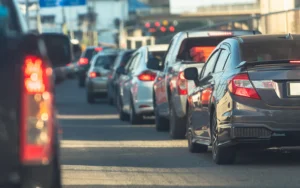 Texas law does not explicitly ban lane splitting, but it does not expressly permit it either. Under Texas Transportation Code § 545.060, vehicles must be driven entirely within a single lane and may only move from that lane when the movement can be made safely. Insurance adjusters routinely use this provision to argue that a rider who was splitting lanes violated the traffic law and caused the crash.
That argument oversimplifies what actually happens in most of these cases. Even if a rider was moving between lanes, the driver who failed to check their mirrors, signal a lane change, or maintain awareness of surrounding traffic still committed an independent act of negligence. Texas courts evaluate fault on the specific facts, not on a blanket assumption that lane splitting is illegal.
How These Accidents Happen on Houston Roads
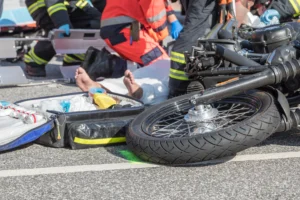 Houston’s traffic congestion creates conditions where lane splitting is common on corridors like I-610, I-45, Highway 290, and the Sam Houston Tollway. When accidents happen, the cause almost always traces back to another driver’s failure, not the rider’s decision to move between lanes.
Common causes include:
- Sudden lane changes without signaling or checking blind spots
- Distracted driving, including texting, app use, or adjusting navigation
- Drivers who intentionally close gaps or swerve toward motorcyclists out of frustration
- Passengers or drivers who open vehicle doors into the path of an approaching motorcycle
- Commercial truck drivers with wide blind spots making lane changes without checking for riders alongside them
Each of these situations involves a driver who failed to do something the law required them to do. That failure does not disappear simply because the rider was between lanes at the time.
Injuries Riders Suffer in Lane Splitting Crashes
Because a lane splitting rider is positioned between two vehicles with almost no room to maneuver, the injuries in these crashes tend to be severe. There is nowhere to go when a car drifts or cuts over without warning.
Injuries our attorneys commonly see in these cases include:
- Traumatic brain injuries, even when a helmet is worn
- Spinal cord damage from lateral impact forces
- Crush injuries and complex fractures from being compressed between vehicles
- Road rash and degloving injuries requiring skin grafts and reconstructive surgery
- Internal organ damage, which may not show symptoms until hours after the crash
- Permanent scarring, disfigurement, or loss of limb function
These injuries carry long-term costs that extend well beyond the initial emergency room visit. Any settlement that does not account for future treatment, lost earning capacity, and ongoing pain falls short of what you are actually owed.
How Fault Is Determined in a Lane Splitting Claim
Texas follows a modified comparative fault rule under the Texas Civil Practice and Remedies Code § 33.001. You can recover compensation as long as you are not found more than 50% responsible for the crash. If you are assigned some percentage of fault, your recovery is reduced by that amount but is not eliminated.
Insurance companies use lane splitting as their primary tool to push fault onto the rider and minimize what they pay. Countering that requires evidence such as traffic camera footage, dashcam recordings, cell phone records showing the other driver was distracted, witness statements, and, in some cases, accident reconstruction analysis.
We gather that evidence quickly and build a case that focuses on what the other driver did wrong, not on where the rider happened to be positioned.
What Compensation You Can Recover
A successful motorcycle accident claim can recover both economic and non-economic damages.
Economic damages include medical bills, lost income, and future financial costs. Non-economic damages cover the personal impact of your injuries, including physical pain and suffering, emotional distress, loss of enjoyment of life, permanent scarring or disfigurement, and loss of companionship for a spouse or partner.
In cases where a driver acted with particular recklessness, such as intentionally blocking a rider or driving while intoxicated, Texas law may also allow punitive damages.
How Lane Splitting Accident Claims Work in Texas
Lane splitting cases involve evidence that disappears fast. Freeway surveillance footage is typically overwritten within days, and dashcam recordings, electronic vehicle data, and witness availability all deteriorate quickly. Getting an attorney involved early is the most effective way to make sure that evidence is preserved before it is gone.
A strong motorcycle accident claim requires documenting the other driver’s negligence and the full scope of your damages. That documentation supports demand negotiations with the insurer. When insurers refuse to offer what the case is worth, taking the case to trial puts the decision in front of a judge or jury instead.
If a lawsuit becomes necessary, you have two years from the date of your accident to file under the Texas Civil Practice and Remedies Code § 16.003. That deadline is strictly enforced, and missing it almost always means losing your right to recover anything regardless of how clear the other driver’s fault may be.
Why Clients Choose Our Firm
Lane splitting claims require a different approach than a standard motorcycle accident case because the insurance company will come in with a ready-made argument against you. Our motorcycle accident lawyers in Houston know those arguments, know how to counter them with evidence, and are available around the clock to start that work immediately.
After-hours calls are some of our busiest times, and someone is always here when you need to talk. We treat every client like family, which means you are not left waiting for updates or passed off to someone who does not know your case. Our team pursues every available avenue for recovery, and we do not collect a fee unless we win.
Frequently Asked Questions About Lane Splitting Accidents in Houston
What If the Police Report Blames Me for Lane Splitting?
A police report is not a final legal determination of fault. Officers often assign blame at the scene with limited information. Independent evidence, including camera footage, witness accounts, and accident reconstruction, can contradict an unfavorable report.
Does Texas Require Motorcyclists to Wear a Helmet?
Under Texas Transportation Code § 661.003, helmets are required for riders under 21 and those without qualifying insurance or a safety course completion. If you were not wearing a helmet, the insurer may argue your head injuries were worsened, but this does not bar your claim entirely.
What If a Commercial Truck Was Involved in the Crash?
Truck-involved lane splitting accidents often involve claims against the driver, the trucking company, and potentially the vehicle owner. Commercial carriers typically carry higher insurance limits, which can mean greater recovery potential for serious injuries.
How Long Does It Take to Resolve a Lane Splitting Accident Case?
Timelines vary based on injury severity, how disputed the fault question is, and whether litigation becomes necessary. Straightforward cases may resolve in several months. Cases with complex liability or catastrophic injuries can take longer, but our Houston lane splitting crash lawyers move as efficiently as the case allows.
What Should I Say, and What Should I Avoid Saying, to the Other Driver’s Insurance Company After a Lane Splitting Crash?
Do not give a recorded statement to the other driver’s insurer without speaking to an attorney first. Adjusters are trained to ask questions that elicit admissions about where you were positioned in traffic, your speed, and whether you saw the other vehicle before the crash.
Any answer that implies you had time to react or that you were aware of the other vehicle’s movement can be used to increase your assigned percentage of fault. You have no legal obligation to provide a recorded statement to the opposing insurer. Our team handles all insurer communication on your behalf from the moment you retain us.
Get a Free Case Review After Your Lane Splitting Accident
Insurance companies count on riders not knowing their rights after a lane splitting crash. You have more options than they want you to believe. Our team at Mokaram Injury Lawyers can explain those options to you and help you exercise your legal rights. Call (281) 222-2222 or contact us online today for a free case review. You pay nothing for our services unless we win.

They are always committed to supporting the people and standing up for the cause. The staff treats everyone with compassion, especially Milagro, who goes above and beyond to ensure humane and respectful care.
From the moment I called, I felt at ease and that’s largely thanks to Lesly. She was incredibly kind, patient, and professional. It’s often overlooked, but that first interaction really sets the tone, especially when you’re calling about something as stressful and personal as a potential injury case.
had a great experience working with Lesly, who handled my case with professionalism, care, and attention to detail. From the beginning, they made me feel heard and supported, clearly explaining the process and always keeping me informed every step of the way. Their communication was timely and thoughtful, and they truly went above and beyond to make a stressful situation feel more manageable.
I spoke with Lesly over the phone and had such a great experience. She was incredibly helpful, patient, and informative. She took the time to explain everything clearly regarding my case and made sure I understood all my options. It made the process way less stressful. Thank you, Lesly, for your professionalism and kindness!
“I live near the Galleria and recently needed help with a premises case I experienced. Lesly Rodriguez took my information, and the entire process was handled smoothly. I appreciate the professionalism and efficiency!”
Working with Ali J was an excellent experience. He handled everything with professionalism and made the process clear and straightforward. I always felt informed and confident knowing he was representing me. I truly appreciate his expertise and highly recommend him.
Mokaram Injury Lawyers made a difficult situation so much easier to handle. Their team really fought for me and made sure I understood every step along the way. I felt like more than just a case number—they genuinely cared about my outcome. Highly recommend them to anyone in need of a reliable and dedicated injury lawyer in Houston!
If you’ve been injured and need someone to advocate for your rights, Mokaram Injury Lawyers is an exceptional choice. With years of experience specializing in personal injury cases, Mokaram Injury Lawyers offers expert legal counsel with a focus on maximizing compensation for medical bills, lost wages, and pain and suffering. Known for a compassionate approach and a strong record of successful outcomes, Mokaram Injury Lawyers fights hard to ensure justice for clients!


Awards & Honors












Contact Us Today to Schedule
Your Free Consultation
Fields Marked With An “*” Are Required