
 Working on or near the water is one of the most physically demanding and dangerous ways to earn a living. Whether you spend your days on an offshore oil platform in the Gulf of Mexico, aboard a commercial fishing vessel, on a tugboat pushing barges through the Houston Ship Channel, or maintaining equipment on a drilling rig, you face risks that most people never think about. When something goes wrong, the consequences are rarely minor.
If you or someone in your family has been hurt in a maritime accident, the legal process ahead of you is unlike a standard personal injury case. Federal maritime law governs most of these claims, and the rules differ from those that apply on land. Hiring a Texas maritime accident attorney who handles these cases regularly is one of the most important decisions you can make right now.
The maritime industry and the insurance companies that support it have legal teams that begin working the moment an accident occurs. Mokaram Injury Lawyers provides injured maritime workers with the same level of aggressive, knowledgeable representation, ensuring a fair process from the very beginning. Families affected by a maritime accident should not face this alone. Contact us at 281-222-2222 today for a free case review with a trusted Texas maritime accident lawyer.
Why Choose Mokaram Injury Lawyers For Help After a Maritime Accident?
 For over three decades, our firm has provided client-centered legal solutions built around personalized attention and real relationships. We treat our clients like family because that is the only way we know how to practice law.
Our team is available for live support 24 hours a day, 7 days a week, and after hours are often our strongest times because that is when injured workers and their families need us most. Mokaram Injury Lawyers takes on every responsibility so you can focus entirely on getting well:
- Providing Free Case Reviews: We sit down with you at no cost to assess your situation, explain the legal process, and help you decide the best path forward.
- Conducting Comprehensive Investigations: Our team gathers evidence from the accident scene, obtains maintenance and inspection records, and documents every detail that supports your claim.
- Identifying All Liable Parties: Maritime accidents can involve vessel owners, operators, equipment manufacturers, staffing companies, and others, and we pursue every responsible party.
- Proving Negligence: We build a clear, evidence-based case showing how the responsible parties failed in their duty to keep you safe on the job.
- Collaborating With Experts: Our firm works with maritime safety engineers, medical professionals, economists, and vocational specialists to strengthen your case.
- Negotiating Fair Settlements: We handle all communications with insurance companies and push hard to reach a settlement that truly reflects what you have lost.
- Litigating Full Verdicts: When the other side refuses to offer a fair resolution, our trial-tested attorneys are fully prepared to take your case to trial and present it before a jury.
Mokaram Injury Lawyers has the resources, determination, and track record to handle the most complex maritime injury cases in Texas. Our firm has secured over $1 billion for injury clients just like you. Trust our firm to fight for you and get the results you deserve.
Types of Maritime Accidents Our Firm Handles
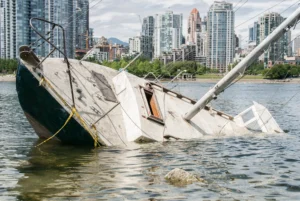 Maritime work environments are inherently hazardous, and accidents can happen on vessels, docks, platforms, and waterways throughout the Texas Gulf Coast. Here are the most common types of maritime accidents that lead to injury and wrongful death claims:
- Offshore platform accidents
- Vessel collisions
- Crane and rigging failures
- Slip, trip, and fall accidents
- Drowning and man-overboard incidents
- Dock and shipyard injuries
- Transportation injuries
- Chemical and toxic exposure
What Is Unseaworthiness?
Under general maritime law, vessel owners have an absolute duty to provide a reasonably safe and seaworthy vessel for their crew. If any condition on the vessel makes it unfit for its intended purpose, the owner may be liable regardless of fault:
- Defective or broken equipment and machinery
- Slippery or deteriorated deck surfaces
- Missing or inadequate safety gear
- Insufficient crew training or understaffing
- Improperly stored cargo
- Malfunctioning navigation or communication systems
- Structural defects in the hull or superstructure
What Is the Jones Act?
The Jones Act, codified at 46 U.S.C. § 30104, gives seamen who are injured during the course of their employment the right to file a negligence claim against their employer. Unlike standard workers’ compensation, the Jones Act allows maritime workers to seek full compensation for their injuries, including pain and suffering. It requires only that the employer’s negligence played any part in causing the harm.
What Is the Death on the High Seas Act (DOHSA)?
The Death on the High Seas Act, found at 46 U.S.C. § 30302, provides a legal remedy for families of workers who die as a result of wrongful acts occurring on the high seas, which is defined as waters beyond three nautical miles from the U.S. shore. DOHSA allows surviving family members to recover pecuniary damages, including lost financial support, funeral expenses, and the loss of future earnings their loved one would have provided.
What Is the Outer Continental Shelf Lands Act?
The Outer Continental Shelf Lands Act (OCSLA), codified at 43 U.S.C. § 1331, extends federal law to the subsoil and seabed of the outer continental shelf and to all artificial islands, platforms, and installations attached to it. For workers injured on offshore oil and gas platforms, OCSLA often determines which body of law applies to their claim and may incorporate state law from the adjacent state, which in the Gulf of Mexico is frequently Texas or Louisiana.
Compensation Available for Texas Maritime Accidents
Maritime accident victims are entitled to damages that typical personal injury lawsuits are not. The following categories of compensation are commonly pursued in Texas maritime injury cases:
- Maintenance and Cure: Under maritime law, injured seamen are entitled to maintenance (daily living expenses) and cure (medical treatment) from their employer until they reach maximum medical improvement.
- Medical Expenses: Coverage for emergency treatment, surgeries, hospital stays, rehabilitation, prescription medications, and all future medical care related to your injury.
- Lost Wages and Earning Capacity: Compensation for the income you have already lost and the paychecks you will miss during your recovery period. If your injury prevents you from returning to your previous line of work or reduces your ability to earn, you can recover the difference in lifetime earnings.
- Pain and Suffering: Compensation for the physical pain, emotional distress, and diminished quality of life that result from your injuries.
- Wrongful Death Damages: When a maritime accident takes a life, surviving family members can recover funeral costs, lost financial support, loss of companionship, and other related damages in a wrongful death claim.
How Long Do I Have to File a Lawsuit After a Maritime Accident in Texas?
The filing deadline for a maritime injury claim depends on the specific law that governs your case. Jones Act claims and general maritime negligence claims carry a three-year statute of limitations. In contrast, claims against the government or under the Longshore and Harbor Workers’ Compensation Act may have deadlines as short as one year. Speaking with a Texas maritime accident attorney as soon as possible protects your right to file before any deadline passes.
FAQ: Answers for Maritime Accident Victims
Who Is Liable for Texas Maritime Accidents?
Liability in a maritime accident case depends on the specific facts, the type of vessel or worksite, and the applicable federal or state law. The following parties may have responsibility for your injuries:
- Vessel owners and operators
- Offshore platform owners and drilling companies
- Employers and staffing agencies
- Equipment and machinery manufacturers
- Maintenance and repair contractors
- Fellow crew members whose negligence caused the accident
- Third-party vessel operators involved in a collision
What Injuries Are Common in Maritime Accidents?
Maritime work involves heavy equipment, extreme conditions, and isolated locations that can make injuries especially severe. The most frequently reported injuries in Texas maritime accident cases include:
- Traumatic brain injuries and concussions
- Spinal cord injuries and paralysis
- Crushed or amputated limbs
- Severe burns from fires or chemical exposure
- Broken bones and fractures
- Hearing loss from prolonged noise exposure
- Respiratory illness from toxic fume inhalation
How Much Does It Cost to Hire a Texas Maritime Accident Lawyer?
Our Texas maritime accident attorneys handle injury claims on a contingency fee basis, which means you don’t owe us a penny unless we recover compensation for you. Our fee is a percentage of the settlement or verdict disclosed before hiring us, so there is no financial risk to you in getting started.
Don’t Wait to Speak to a Texas Maritime Accident Lawyer
Every day that passes after a maritime accident can affect the strength of your claim. Mokaram Injury Lawyers has the knowledge, the resources, and the dedication to take on the maritime industry and the insurance companies that protect it. If you or a family member was hurt on the water, on a dock, or on an offshore platform, we want to hear your story.
Call us right now at 281-222-2222 or contact us online today for your free case review with a Texas maritime accident lawyer who will move quickly to investigate your case and hold the responsible parties accountable. You can also learn more about our firm and the attorneys who will be working on your behalf. The sooner you reach out, the sooner we can get to work for you.

They are always committed to supporting the people and standing up for the cause. The staff treats everyone with compassion, especially Milagro, who goes above and beyond to ensure humane and respectful care.
From the moment I called, I felt at ease and that’s largely thanks to Lesly. She was incredibly kind, patient, and professional. It’s often overlooked, but that first interaction really sets the tone, especially when you’re calling about something as stressful and personal as a potential injury case.
had a great experience working with Lesly, who handled my case with professionalism, care, and attention to detail. From the beginning, they made me feel heard and supported, clearly explaining the process and always keeping me informed every step of the way. Their communication was timely and thoughtful, and they truly went above and beyond to make a stressful situation feel more manageable.
I spoke with Lesly over the phone and had such a great experience. She was incredibly helpful, patient, and informative. She took the time to explain everything clearly regarding my case and made sure I understood all my options. It made the process way less stressful. Thank you, Lesly, for your professionalism and kindness!
“I live near the Galleria and recently needed help with a premises case I experienced. Lesly Rodriguez took my information, and the entire process was handled smoothly. I appreciate the professionalism and efficiency!”
Working with Ali J was an excellent experience. He handled everything with professionalism and made the process clear and straightforward. I always felt informed and confident knowing he was representing me. I truly appreciate his expertise and highly recommend him.
Mokaram Injury Lawyers made a difficult situation so much easier to handle. Their team really fought for me and made sure I understood every step along the way. I felt like more than just a case number—they genuinely cared about my outcome. Highly recommend them to anyone in need of a reliable and dedicated injury lawyer in Houston!
If you’ve been injured and need someone to advocate for your rights, Mokaram Injury Lawyers is an exceptional choice. With years of experience specializing in personal injury cases, Mokaram Injury Lawyers offers expert legal counsel with a focus on maximizing compensation for medical bills, lost wages, and pain and suffering. Known for a compassionate approach and a strong record of successful outcomes, Mokaram Injury Lawyers fights hard to ensure justice for clients!


Awards & Honors














Contact Us Today to Schedule
Your Free Consultation
Fields Marked With An “*” Are Required