



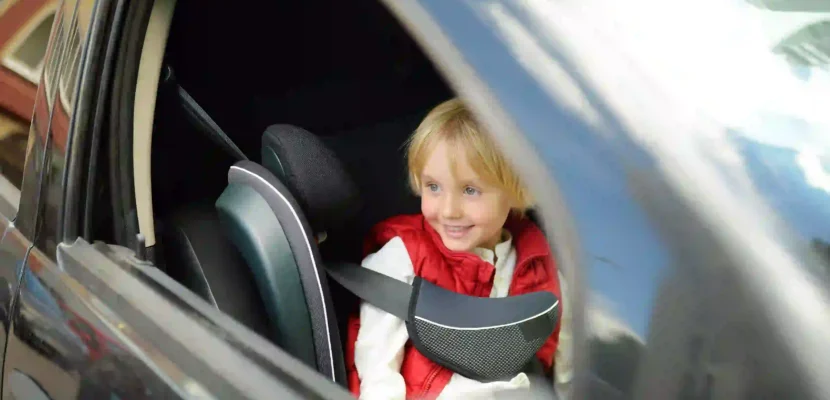
In Texas, a child may legally ride in the front seat once they reach age 8 or 4 feet 9 inches tall, whichever comes first. Below that threshold, state law requires a child passenger safety seat in any seating position. Meeting the legal minimum does not automatically mean the front seat is the safest choice, and most child safety organizations recommend keeping kids in the back seat until at least age 13.
What Texas Law Says About Children Sitting in the Front Seat
Many parents search for Texas front seat requirements to determine when their child can legally ride up front. The answer ties to Texas safety seat laws, not a standalone “front seat” statute.
Under Texas Transportation Code § 545.412, children younger than 8 must be secured in a child passenger safety seat unless they are taller than 4 feet 9 inches. Either threshold is sufficient: a child under 8 who is at least 4’9″ may legally use a standard seat belt, and a child who turns 8 but remains shorter than 4’9″ may also sit in the front legally. Once a child meets either condition, the car seat requirement no longer applies.
Legal permission does not always equal optimal safety. Proper seat belt fit is key to whether front seat placement is appropriate for a given child.
Why the Back Seat Is Still Considered Safer
Even where Texas law allows front seat use, safety organizations consistently recommend keeping children in the back seat as long as possible. Front airbags are built for adult bodies and deploy with enough force to cause serious head, neck, and chest injuries in smaller passengers.
The Texas Department of Public Safety recommends that children under 13 ride in the back seat, based on real-world crash data and injury patterns. According to the National Safety Council, properly installed car seats reduce the risk of infant death in a crash by 71% and reduce the risk of serious injury or death for toddlers by 54%.
Texas Safety Seat Laws and Car Seat Stages
Texas safety seat laws protect children based on size and development, not just age. Restraint systems must be sized to a child’s physical characteristics, and drivers are responsible for their proper use. Violations are enforced statewide and can result in fines and penalties.
Child safety systems evolve as a child grows. The four stages are:
- Rear-facing seats: Used for infants and toddlers, typically from birth until age 2 or until the child reaches the seat’s height or weight limit, whichever comes first.
- Forward-facing seats: Used for children who have outgrown their rear-facing seat, generally from age 2 until around age 4 or until they exceed the harness height or weight limit.
- Booster seats: Used for children who have outgrown forward-facing seats, typically from age 4 until they reach 4 feet 9 inches tall or are between ages 8 and 12.
- Standard seat belts: Used once a child is at least 8 years old or 4 feet 9 inches tall and the seat belt fits correctly across the chest and lap without a booster.
Note: These are general guidance ranges. Manufacturer height and weight limits for each seat take priority over age ranges, and children should stay in each stage as long as they fit within those limits.
Moving too early between stages can reduce protection, even when the law technically permits it.
How Seat Belt Fit Affects Safety
Even if a child meets legal requirements, seat belt fit determines whether front seat placement is truly appropriate. A properly fitted seat belt should:
- Rest across the upper thighs, not the stomach
- Cross the chest and shoulder, not the neck or face
- Remain snug without slack
If a seat belt does not fit correctly, the child may be at greater risk of injury in a collision. Height is a key factor in determining whether a child is truly ready for the front seat.
Risks of Front Seat Placement for Children
Children in the front seat face greater collision risks due to airbag deployment and proximity to the dashboard. Potential risks include:
- Head and brain injuries from airbag impact
- Neck and spinal injuries due to force distribution
- Chest trauma from restraint systems or dashboard contact
- Increased injury severity compared to rear seat positioning
Many safety organizations recommend delaying front seat use even after legal requirements are met.
Penalties for Failing to Follow Texas Safety Seat Laws
Drivers who fail to comply face a misdemeanor offense, fines between $25 and $250, additional court costs, and potential liability in a car accident claim. Improperly restrained children also face a much greater risk of serious injury in a crash.
Practical Tips for Parents and Caregivers
These steps go beyond the legal minimums and can further reduce risk:
- Keep children in the back seat as long as possible
- Use booster seats until seat belts fit properly
- Check manufacturer guidelines for car seat use
- Position the front seat as far back as possible if a child must sit there
- Confirm airbags are functioning properly
How Front Seat Decisions Affect Safety and Legal Claims
Front seat decisions often arise when a child moves from a booster seat to a standard seat belt. The choice affects both legal compliance and long-term safety. In a Texas car accident claim, whether every occupant was properly restrained can be a deciding factor.
Frequently Asked Questions
What Happens if a Child Is Injured Because They Were in the Front Seat Too Early?
If a child is injured while riding in the front seat before meeting Texas legal requirements, the driver responsible for securing that child may face both criminal penalties and civil liability, depending on the circumstances of the crash.
What If My Child’s Car Seat Was Not Installed Correctly During a Crash?
Improper installation can affect both injury outcomes and legal claims. If a car seat was not secured according to the manufacturer’s instructions, a defense attorney or insurer may argue that the improper installation contributed to the severity of the child’s injuries. Under Texas comparative fault rules, a caregiver found partially responsible for worsened injuries due to improper restraint use could see their total compensation reduced by their assigned percentage of fault.
Are There Any Exceptions to Texas Car Seat Requirements?
Yes. Texas law provides a defense to prosecution if the driver was operating the vehicle in an emergency or for a law enforcement purpose. Additionally, a driver is not required to secure a child in a safety seat if all seating positions equipped with child safety seats or seat belts are already occupied. These exceptions are narrow and do not apply to ordinary, everyday driving situations.
Speak With Mokaram Injury Lawyers About a Child Injury Case
If a child is injured in a car accident, Texas safety seat laws may be relevant to what happened and who is responsible. Our team at Mokaram Injury Lawyers is available 24/7, including after hours, to review your case at no cost.
Call us at (281) 222-2222 or visit our contact page to discuss your situation.